The brand doc that kicked this off pitched a quiet, personal thing: a local-first log of restaurants you’d visited, offline by default, shareable only when you felt like it. Tavern was the working name — cozy, low-stakes, a catalog for yourself. Palate won out instead, and somewhere in the build the whole shape of the thing changed with it.
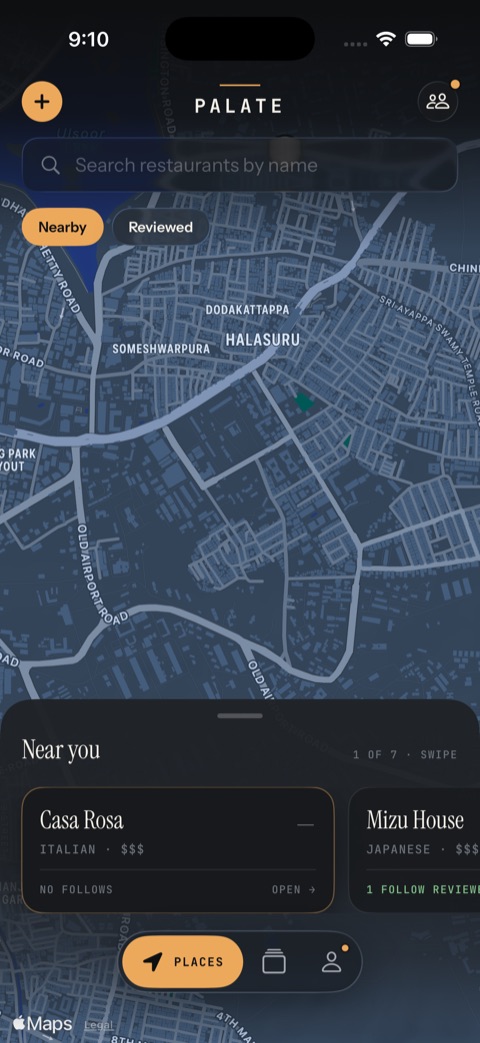
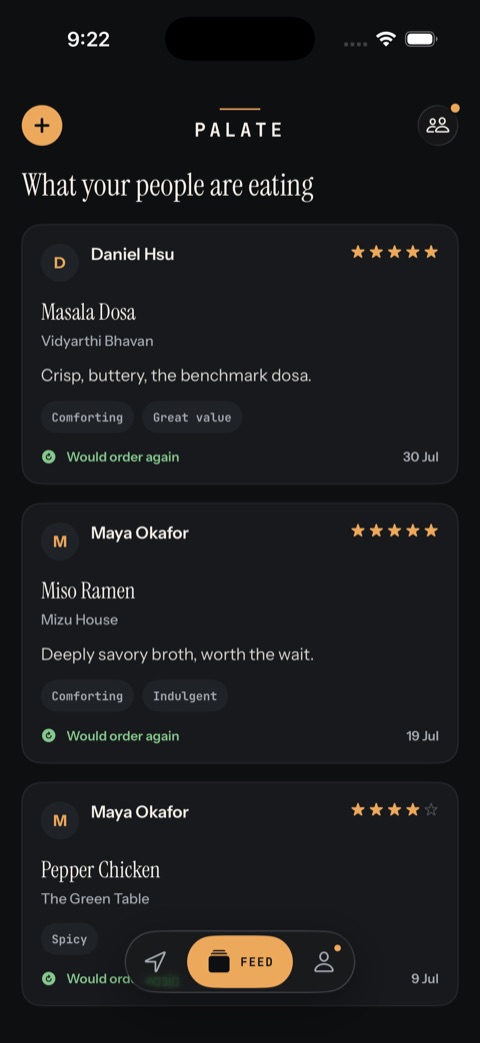
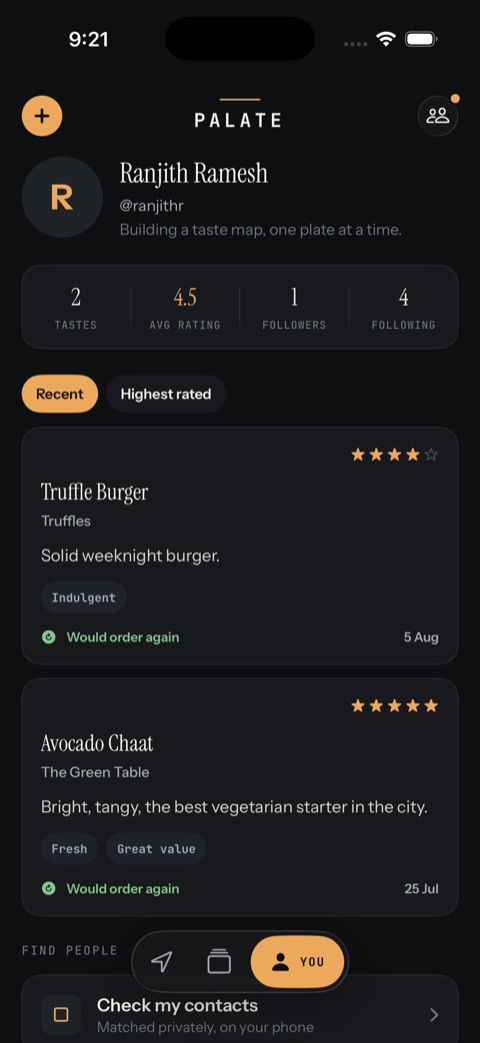
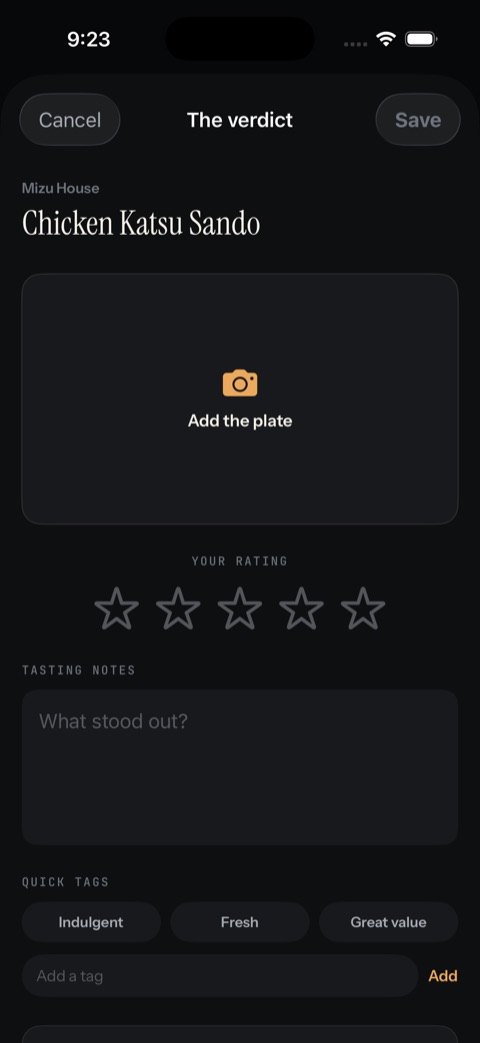
Screens above are running against seeded sample data in the simulator, not a live backend.
From journal to dining graph
The single-player version didn’t last. Palate is now a social dining journal: you log the dishes you eat — rating, notes, tags, a reorder intent, a photo — and follow the people whose taste you trust to see what they order. Following is approval-gated, so nobody sees a review until they’ve accepted your request. Restaurant and dish identity are shared across everyone; opinions stay private to your follow graph.
That one rule — public facts, private opinions — ended up shaping almost every screen. A restaurant page always shows the aggregate rating; the individual reviews underneath are either there or replaced with a locked state, depending on whether you follow the person who wrote them.
What’s built
Five tabs’ worth of behavior, all running local-first against a schema shaped to match a future Supabase backend field-for-field — swapping in a real backend later is a service-layer change, not a model rewrite.
The details that took longest
Sign in with Apple, verified end-to-end
Provisioning confirmed clean, real sign-in tested and working on a physical phone. The debug “skip sign-in” button that stood in during early builds is gone — the real thing is now the only door in.
The search dropdown, redesigned
First pass was a boxed card under the search bar. Second pass de-boxed it into hairline rows in one solid panel, added a match-count footer past four rows, and highlighted the matched substring in each name — small, but it’s the screen you touch most.
Invite cap, tuned by hand
Started as a hard, non-renewable 3-per-user cap with an open “exact number TBD” comment sitting in the code. Landed on 5 starter invites that refill weekly — used 2 of 5, you get topped back up to 5, not stacked on top.
What’s deliberately not there
A few calls worth writing down so they don’t get re-litigated later:
- No public Explore feed. Discovery stays follow-based only — contacts, username search, invite links, and “who else reviewed this place.”
- No dedicated Log tab. It lives in the “+” button in the top bar instead — a fourth tab for it was proposed and turned down.
- No push notifications for follow requests. A badge dot only — state comes to you when you open the app, not before.
What’s next
- A “want to try” wishlist — bookmark a place before you’ve eaten there, distinct from a post-visit review.
- Editing your profile after onboarding — avatar, display name, and username are currently set once and never again.
- A manual “add a restaurant” flow for places Apple Maps doesn’t surface.
- Food-themed invite codes, instead of a random 6-character string.
Questions about this build?
I’d be glad to hear what stood out, what you’d change, or what you’d like covered next.
Send a noteOpens your email app.